
Authors, Philosopher
Fyodor Dostoevsky: The Dark Mirror of the Human Soul
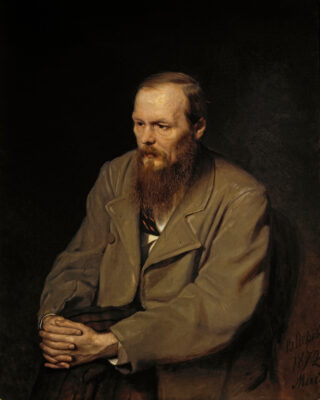
Born: November 11, 1821
Died: February 9, 1881
Few writers have probed the depths of human psychology as powerfully as Fyodor Dostoevsky. With his piercing insight into guilt, faith, morality, and free will, Dostoevsky carved a literary legacy that continues to influence not only novelists, but also philosophers, filmmakers, and psychologists.
Family Background & Early Life
Fyodor Mikhailovich Dostoevsky was born in Moscow, Russia, to Mikhail Dostoevsky, a doctor at a charity hospital for the poor, and Maria Dostoevskaya, a gentle and religious woman who nurtured her son’s early love for literature.
The young Fyodor grew up surrounded by suffering—his father’s hospital exposed him to the rawness of poverty and death, themes that would echo throughout his writing. His father was a harsh and sometimes violent man; some biographers claim he was murdered by his own serfs, though this remains unconfirmed. His mother died when Fyodor was just 15.
Education and the Birth of a Writer
Initially pushed toward a military career, Dostoevsky attended the Nikolayev Military Engineering Institute in Saint Petersburg. Though he graduated and served briefly in the military, his passion for literature was already consuming him.
In 1846, he published his first novel, Poor Folk, to immediate acclaim. Critics hailed him as a promising new voice. But just as his literary star began to rise, his life took a harrowing turn.
Arrest, Imprisonment, and Exile
In 1849, Dostoevsky was arrested for his involvement with the Petrashevsky Circle, a group of intellectuals who discussed utopian socialism and liberal ideas. He was sentenced to death—only to be spared at the last minute by a mock execution ordered by Tsar Nicholas I. This traumatic experience had a profound psychological impact and redefined his spiritual and moral worldview.
He spent the next four years in a Siberian labor camp, followed by several more years of compulsory military service in exile. These years transformed him, solidifying his religious convictions and deepening his empathy for suffering humanity. He would later describe these experiences in The House of the Dead (1861), a semi-autobiographical novel.
Personal Life & Financial Struggles
Dostoevsky’s personal life was tumultuous. He was plagued by epileptic seizures, lifelong financial instability, and a destructive addiction to gambling that left him perpetually in debt.
In 1867, he married his second wife, Anna Grigoryevna Snitkina, a much younger stenographer who helped him complete his novels on brutal deadlines. Anna would become one of the most stabilizing forces in his life, managing his finances and estate long after his death.
Despite recurring poverty, illness, and personal loss (two of his children died young), Dostoevsky continued writing at an astonishing pace.
Major Works
His mature novels are towering achievements in world literature:
-
Crime and Punishment (1866): A psychological thriller about morality, redemption, and the torment of guilt, centering on a destitute student who murders a pawnbroker.
-
The Idiot (1869): A spiritual exploration of innocence and goodness in a corrupt world.
-
Demons (also known as The Possessed, 1872): A dark, political satire of Russian nihilism and revolutionary extremism.
-
The Brothers Karamazov (1880): His final and perhaps greatest novel, examining the complexities of faith, family, and free will. The “Grand Inquisitor” chapter is one of the most discussed passages in modern philosophy.
Death and Legacy
Dostoevsky died in 1881 at the age of 59, shortly after finishing The Brothers Karamazov. He was mourned by thousands, and his funeral became a national event.
Though initially controversial and not always understood during his lifetime, Dostoevsky is now regarded as one of the most important writers in the Western canon. His works have been translated into over 170 languages and are widely taught in philosophy, theology, and literature courses around the world.
Dostoevsky in Modern Culture
Dostoevsky’s influence is everywhere:
-
Sigmund Freud called him “a man who knew more about psychology than any scientist could hope to.”
-
Friedrich Nietzsche famously said, “Dostoevsky is the only psychologist from whom I have anything to learn.”
-
In popular culture, his novels appear in films like The Machinist and Taxi Driver, which explore themes of guilt, alienation, and madness reminiscent of Raskolnikov.
-
TV shows such as Breaking Bad and Mr. Robot draw heavily from Dostoevskian themes of moral ambiguity and inner torment.
-
His works have inspired adaptations in opera, film, stage plays, and even anime.
His name is regularly cited alongside Shakespeare and Tolstoy as one of the greatest literary minds in history.
Final Thoughts
Dostoevsky was not a writer of easy answers or tidy resolutions. Instead, he explored the chaos of the human condition—the battle between good and evil, belief and doubt, freedom and responsibility. His works continue to speak to readers across time, particularly in an age still grappling with existential questions and moral complexity.
To read Dostoevsky is not just to enter a story, but to enter a philosophical conversation that stretches across centuries.
Shop for items featuring Fyodor Dostoevsky quotes.
